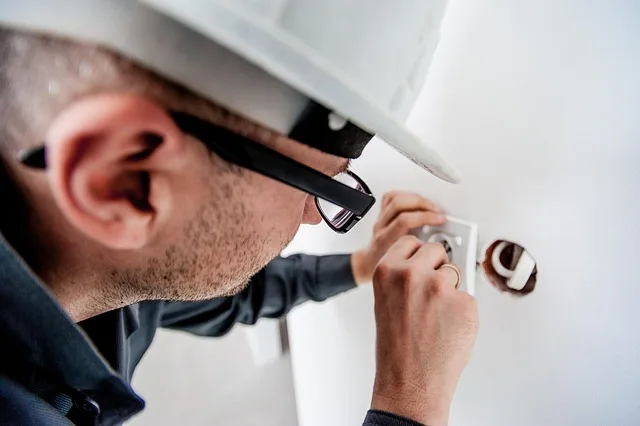

Electrical Work in New Building Apartments — Moscow
When you move into a new apartment in Moscow, the electrical installation often needs completion or adaptation for your lifestyle. Properly planned and executed electrical work ensures safety, reliability and compliance with Russian standards (ПУЭ — Правила устройства электроустановок) and local requirements. Below is a practical guide covering what to expect, what to specify, and how to hire the right professionals.
Quick overview
— New-build apartments commonly have a basic delivery set: meter, incoming cable, and a simple distribution board.
— Finishing electrics (socket and lighting layout, appliance circuits, switches, smart systems) are usually the owner’s responsibility.
— All work must follow ПУЭ and building management / energy supplier rules; major changes may require documentation and coordination with the grid operator.
Legal & regulatory notes (Moscow)
— Adhere to ПУЭ and local building regulations.
— Coordinate with your developer, managing company (ТСЖ/УК) and energy supplier when modifying incoming supply, changing metering or increasing rated capacity.
— For connecting new meters, changing capacity or three-phase supply, contact your energy supplier — in Moscow that means the relevant энергоснабжающая организация.
— Keep project documentation and test reports; they may be required when you register changes with the grid operator or for resale.
Typical scope of electrical work in an apartment
— Load calculation and electrical project (schematics, protective devices, cable sizing).
— Layout of sockets, switches and lighting points to suit interior finishes.
— Selection and installation of distribution board (щиток) with breakers (автоматы), RCDs (УЗО or диффавтоматы/RCBO).
— Dedicated circuits for high-power appliances: electric stove, oven, hob, washing machine, boiler, air conditioner, EV charger.
— Meter installation or replacement and sealing by the energy supplier if required.
— Earthing / equipotential bonding and surge protection (УЗИП).
— Commissioning tests: insulation resistance, continuity, polarity, RCD operation and load checks.
— Documentation handover (as-built schematics, test reports, warranty).
Materials and equipment (common in Moscow)
— Cables: lighting 1.5 mm² (often ПВС or NYM), sockets 2.5 mm², ovens/boilers 4–10 mm² depending on load; for heavy single-phase loads often 6 mm²+, for three-phase 5× etc. Use VVGng‑LS/NYM as appropriate and fire-safe types for common areas.
— Protective devices: MCBs (автоматические выключатели), RCDs (УЗО), RCBOs (диффавтомат) for select circuits, surge protectors.
— Distribution board: modular DIN rail panel with labeled circuits and space for future expansion.
— Connectors and terminals rated for expected currents; use torque-specified connections.
Design principles and recommendations
— Separate lighting and socket circuits; separate high-power appliances onto dedicated circuits.
— Consider reserve capacity and space in the distribution board for future upgrades (e.g., EV charger, HVAC).
— Use RCDs/RCBOs for protection against earth faults — at least for wet areas (bathroom, kitchen) and for circuits supplying power tools.
— Install surge protection at the main board, especially in Moscow where lightning and transient surges can damage electronics.
— Provide correct equipotential bonding in bathrooms and around metal plumbing.
— Plan for smart-home or low-voltage systems (LAN, doorphone, intercom) during finishing to avoid later invasive works.
Safety and testing
— After installation perform insulation resistance tests (megger), continuity and polarity checks, RCD trip testing and functional testing under load.
— Obtain written test reports and an act of completed works (передаточный акт).
— Never work on live circuits; always de-energize and verify absence of voltage.
Hiring electricians in Moscow — what to check
— Experience and portfolio of apartment finishes in new buildings.
— Certifications: ask for professional certificates, qualifications and if relevant, SRO membership or contractor insurance. (Note: private electricians may not have SRO; for large or complex jobs prefer companies with formal qualifications.)
— Written contract with scope, timeline, materials list, warranty and payment schedule.
— Ask for references and sample documentation (project, test protocols).
— Agree on hand