Electrical Work in New-Build Apartments — Moscow Guide
Moving into a new building in Moscow is a great opportunity to get the apartment electrical system right from the start. This guide covers practical steps, local rules to watch for, technical recommendations, safety points and a homeowner checklist so you can plan and supervise electrical work with confidence.
Who this is for
— New apartment owners finishing a developer handover
— Renovation contractors and project managers
— Anyone in Moscow preparing electrical works, meter installation or upgrading circuits
Key legal and regulatory points (Moscow)
— Follow the Russian electrical regulations: *Правила устройства электроустановок (ПУЭ)* and applicable SNiP/ГОСТ standards.
— Coordination with the building’s manager/developer and the local network operator (e.g., Mosenergosbyt / сетевой оператор) is required for meter installation and changes to the incoming supply.
— Use licensed electricians and contractors. For significant work you may need formal acceptance or commissioning documents from an authorized organization.
Overall process (recommended sequence)
1. Initial inspection of developer handover and incoming board (вводный щит).
2. Load calculation and simple electrical project (schematics, circuit list).
3. Obtain any necessary technical conditions / permits from the network operator.
4. Rough-in (cabling, boxes, earthing/grounding, distribution board installation).
5. Plastering, finishing stage (installation of sockets, switches, fixtures).
6. Testing, commissioning, meter installation and handover documentation.
Project & planning: what to decide early
— Desired appliances and their power (electric stove/oven, induction, washing machine, dryer, air conditioners, boiler, underfloor heating, EV‑charger).
— Lighting plan (rooms, dimmers, LED drivers), smart controls, and placement of switches/outlets relative to furniture.
— Reserve capacity — don’t undersize the main breaker or main conductors; plan for future loads.
— Decide on smart home level (simple Wi‑Fi relays vs KNX/Modbus/Bus systems) early — it affects cabling.
Typical circuits and protection
— Separate circuits for: lighting, general sockets, kitchen sockets, oven/stove, washing machine, water heater, AC units, electric floor heating.
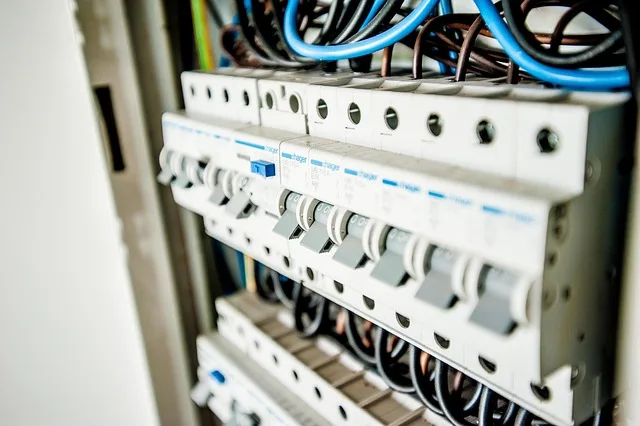
— Use miniature circuit breakers (автоматы) with selectivity and rated current chosen by load calculation.
— Residual-current devices (RCD / УЗО) recommended on all socket circuits and on bathroom / kitchen circuits for safety. Consider combined RCD + breaker (диффавтомат) for convenience.
— Use an RCD or device with selective tripping where necessary (cascading protection).
Cables and materials
— Use fire-retardant, low-smoke cables suitable for indoor use (commonly used: ВВГнг‑LS, or equivalent).
— Adequate conductor cross-sections: lights (1.5 mm²), sockets (2.5 mm²), ovens/EV/heat loads (4–6 mm² or larger depending on rating), main bus (as calculated). Always confirm with a load calc.
— Good-quality DIN-rail distribution board with space for future modules; label circuits clearly.
— Metal or insulated mounting boxes rated for finish thickness. Use fireproof gaskets/putty where cables pass fire-rated partitions.
Earthing, bonding and schemes
— Ensure correct protective earthing and equipotential bonding per ПУЭ. In many apartment buildings the incoming supply uses TN‑C‑S or TN‑S; confirm with the network operator.
— Connect protective earth (PE) reliably to the apartment distribution board. Do not dismantle shared building earthing systems.
— For additional protection in bathrooms/kitchens, use RCDs and class IP-rated fixtures.
Metering and connection to network
— Agree meter placement and type with the network operator and building management. Moscow typically requires individual apartment meters with seals and documentation.
— For load increases (e.g., converting gas stove to electric), apply for technical conditions (ТУ) and permission — this may require network operator approval and upgrade of the building’s supply.
Safety & fire protection
— Use non‑combustible or low‑smoke halogen-free cable in communal and apartment vertical shafts.
— Seal cable penetrations in fire-rated walls/floors with approved firestop materials.
— Install smoke detectors, and consider a heat detector in the kitchen or near e‑appliances (respecting false alarm risks).
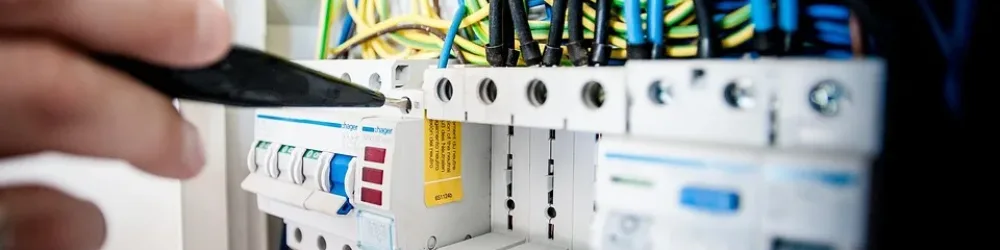
— Test residual protection and insulation resistance after installation.
Smart home & energy efficiency
— LED lighting and efficient appliances reduce load and operating costs.
— Consider energy metering modules or smart meters for per-circuit monitoring if you want detailed usage data.
— Plan for future upgrades (spare DIN slots, conduit for low-voltage/signal cables).
Documentation you should receive
— Final electrical schematic and marked distribution board diagram.
— Test reports: insulation resistance, continuity, RCD trip test results.
— Certificate of compliance / commissioning acts (если применимо).
— Meter installation certificate and seals from the network operator.
Typical costs & timeline (very approximate)
— Simple apartment layout & load calculation / project: 5,000–25,000 ₽.
— Rough-in (cabling, boxes, board) for 1‑2‑bedroom apartment: