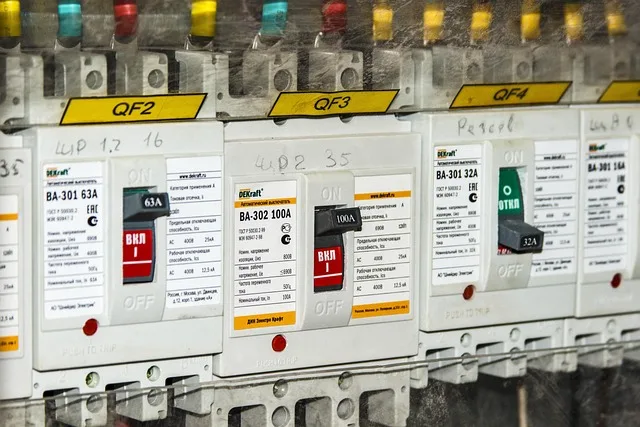

Electrical Work in New-Build Apartments in Moscow: What Every Buyer Should Know
Buying a new apartment in Moscow brings many advantages — but electrical work is one area where early planning pays off. This guide explains what is normally included, what buyers commonly add, legal and safety requirements, realistic costs and timelines, and how to choose a contractor.
Quick overview
— New developments often deliver apartments «under finishing» with either basic wiring to a meter or minimal rough wiring.
— Additional electrical work frequently requested: full interior wiring, balanced circuit distribution, additional sockets, lighting design, power upgrades for ovens/AC, and smart-home integration.
— All electrical work must comply with Russian regulations (PUE — Правила устройства электроустановок) and local utility requirements.
What developers typically include vs what you may need
— Typically included:
— Main incoming line and building distribution up to the apartment meter (subject to developer contract).
— A basic circuit (lighting and a few outlets) or no finishing at all depending on the developer’s handover standard.
— Often required from the owner:
— Full interior wiring and switch/outlet placement.
— Dedicated circuits for kitchen appliances (oven, cooktop), washing machine, AC, electric heater.
— Grounding (заземление), RCDs/automatic breakers and a modern distribution board (электрощиток).
— Meter installation, registration and any power increase requests with the network operator.
Legal and technical framework (what to follow)
— Main regulation: PUE (Правила устройства электроустановок). Also follow current building codes and the requirements of your local network operator.
— Metering and connection must be coordinated with the network company servicing Moscow (network operator) and the management company/ТСЖ of your building.
— For major changes (power upgrades, three-phase supplies) you must obtain technical conditions (ТУ) and sign the power supply agreement.
Typical components and technical choices
— Cables: VVG/ВВГ (VVGng-LS) and NYM are commonly used — choice depends on fire safety requirements and installation method.
— Circuit breakers (автоматы) and RCDs/УЗО: use selective protection and correct characteristics for each circuit.
— Protective earthing and equipotential bonding — crucial in high-rise buildings; verify whether the building uses TN-C-S, TN-S, etc.
— Separate circuits for:
— Lighting
— General sockets
— Kitchen sockets and built-in appliances (oven/cooktop often require a dedicated, higher-capacity circuit)
— Washing machine
— Air conditioning
— Electric heating/underfloor heating (if used)
Safety essentials
— Always use qualified electricians with appropriate certification and group of electrical safety.
— Never ignore RCDs and proper grounding — these reduce electrocution and fire risks dramatically.
— Test and commission all circuits before finishing work (pressure test, insulation resistance, RCD operation test).
— Keep installation documentation: wiring diagrams, certificates, test reports — necessary for future repairs and for the network operator.
Costs (approximate ranges in Moscow; vary by apartment size and scope)
— Basic finishing of wiring (1–2-room apartment): 30,000–80,000 ₽
— Full turnkey electrical installation (3–4 rooms, multiple circuits, modern switchgear): 80,000–250,000 ₽
— Dedicated 3-phase line for electric stove/large loads (including agreement with network operator): 20,000–120,000+ ₽ (depends on fees and required reinforcement)
— Smart-home lighting and advanced automation: from 40,000 ₽ upward depending on complexity
Note: Prices depend on materials, number of sockets/points, labor rates and whether a power increase or technical conditions are required. Always get several written estimates.
Typical timelines
— Design and load calculation: 2–7 days
— Obtaining technical conditions/agreements (if required): 1–6 weeks (depends on network operator workload)
— Installation of interior wiring: 2–10 business days (small → large apartments)
— Metering/connection and official commissioning: 1–4 weeks (can be longer if network works or upgrades are needed)
Choosing a contractor — checklist
— Ask for:
— Company details, registration and insurance.
— Certificates of electricians (group of electrical safety) and past completed jobs/references.
— Written commercial proposal with itemized scope, materials brands, warranty terms and payment schedule.
— Work permit procedures and commissioning/testing documentation.
— Prefer contractors who:
— Provide schematic wiring diagrams and an execution plan.
— Offer a written warranty on workmanship and materials.
— Coordinate with building management and the network operator on your behalf (if requested).
— Beware of quotes that are much lower than market — they often omit required protective devices or use inferior materials.