
Electrical Work in New-Build Apartments (Moscow)
Moving into a new-building apartment in Moscow is a chance to plan a safe, convenient and future-proof electrical system. New constructions often come with a “builder’s” basic electrical supply, but finishing and final wiring for everyday life usually require a separate professional scope of work. This guide explains the typical stages, technical requirements, safety points and practical tips for electrical work in a Moscow apartment.
What to expect in a new building
— Developers typically deliver power to the apartment’s distribution point or a rough internal wiring (lighting and basic sockets).
— Final layout, additional circuits, household appliance feeds, grounding/equipotential bonding and metering may be left to the owner or finishing contractor.
— Coordination with the managing organization and the local grid company is often required for meter installation and commissioning.
Main stages of electrical work
1. Design and load calculation
— Room-by-room lighting and outlet plan.
— Calculation of total and per-circuit loads (to choose cable cross-sections, protective devices and phases).
— Layout of the distribution board (щит) and routes for cables and conduits.
2. Selection of materials and equipment
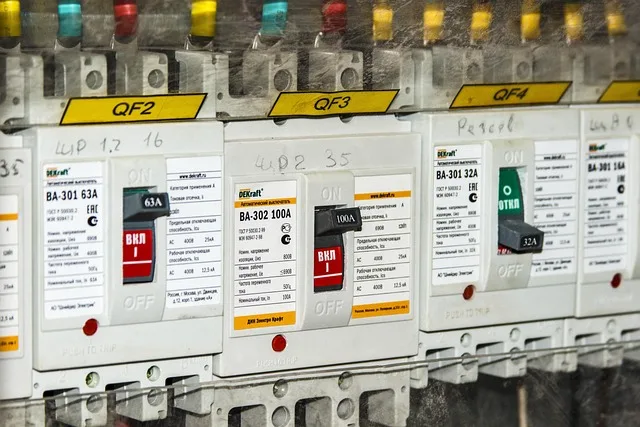
— Cables, automatic breakers (автоматы), RCDs/RCBOs (УЗО/УЗО+автомат), surge protection (УЗИП), sockets, switches, junction boxes, distribution board.
3. Rough-in wiring (during construction/after screed)
— Installation of wiring channels, boxes, concealment of cables.
— Protection of wiring where it passes through partitions.
4. Installation of panel and devices
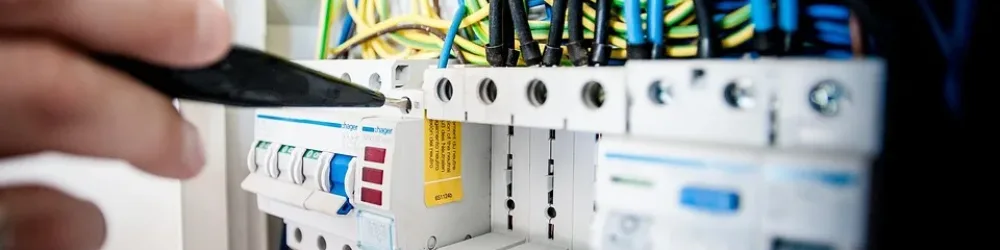
— Mounting the distribution board, breakers, RCDs, meter socket (if needed).
— Dedicated circuits for heavy appliances (oven, hob, washing machine, boiler, HVAC).
5. Grounding and equipotential bonding
— Ensuring correct earthing scheme and bonding for wet areas.
6. Measurement, testing and documentation
— Insulation resistance, continuity, RCD trip testing — produce protocols for acceptance.
— Provide circuit diagrams and labels on the panel.
7. Commissioning and handover
— Meter acceptance with the grid company (if required).
— Written warranty from the contractor and handover of documentation.
Key technical recommendations (practical)
— Use copper conductors and fire-safe cable types — common Russian choices: ВВГнг-LS, NYM or similar with low-smoke, halogen-free properties where required.
— Typical conductor cross-sections (common practice — confirm by load calculation):
— Lighting circuits: 1.5 mm² Cu
— General sockets: 2.5 mm² Cu
— Electric cooker/oven (single-phase): 4–6 mm² Cu (or 6 mm²