
Overview
Moving into a new apartment in Moscow brings many advantages — but electrical work often requires attention before you fully settle. This guide covers what developers typically provide, what you should check and upgrade, Moscow-specific procedures, safety rules, and practical recommendations for wiring, protection and future-proofing.
What developers usually supply
— Basic power supply to the apartment distribution board (щиток) and a single or multi-tariff electricity meter (счетчик).
— A minimal set of wiring, sometimes only for lighting and a few sockets. Finishing-level wiring varies by developer and contract.
— Common-area wiring, riser connection and main incoming cable responsibility.
*Important:* always check your purchase contract and acceptance certificate (акт приема-передачи) to know the exact scope of provided electrical works.
Acceptance and inspection on handover
— Inspect the apartment distribution board: presence of meter, main switch, labels, and accessible space for additional breakers.
— Verify earthing/grounding (заземление/зануление) and PEN/PE configuration.
— Request wiring diagrams and as-built documentation from the developer.
— Perform basic tests with the help of a licensed electrician: polarity, continuity, RCD trip test, insulation resistance (megger).
Regulations and local formalities
— Work must comply with Russian rules — PUE (Правила устройства электроустановок) and relevant GOST standards.
— For changes to capacity, relocation of the meter, or conversion to three-phase supply you must contact the local grid operator (in Moscow: МОЭСК / MosEnergo / Мосэнергосбыт depending on the service) and obtain a technical connection or change agreement.
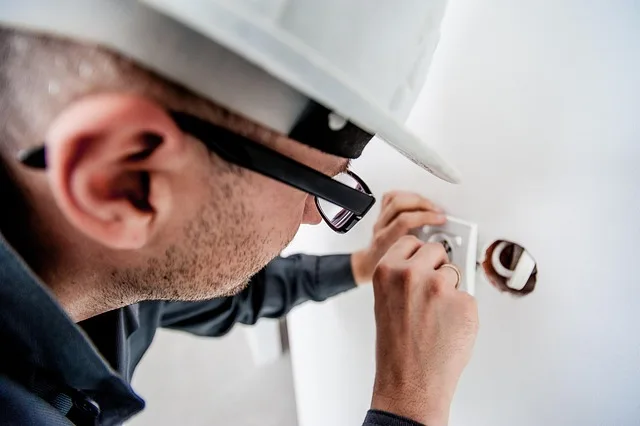
— Major electrical rework should be executed and/or signed off by a licensed electrician/organization; keep commissioning documents and work certificates.
Distribution board, metering and capacity
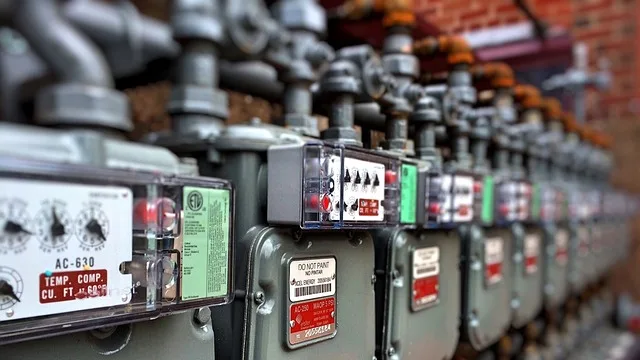
— Typical apartment board should include: main circuit breaker, individual circuit breakers or RCBOs, RCDs (УЗО), surge protection devices (SPD), and the meter.
— Standard supply: single-phase 220–230 V, but kitchens with electric ovens or special needs may require three-phase or higher contracted capacity.
— To increase contracted capacity (kW) or add three-phase, submit an application to the grid operator — this can take time and involve costs.
Recommended wiring and conductor sizes (general guidance)
— Lighting circuits: copper 1.5 mm² (1.5 mm² Cu). Circuit breaker 6–10 A.
— General-purpose sockets: copper 2.5 mm². Circuit breaker 16–20 A.
— Washing machine / dishwasher on dedicated socket: 2.5 mm² with 16–20 A breaker.
— Electric oven/hob: separate circuit, 4 mm² to 6 mm² copper depending on power; breaker 25–32 A (or higher) or a dedicated three-phase feed as required.
— Air conditioning / heat pumps: typically 2.5 mm² for split-systems up to moderate power; check appliance nameplate.
— Charging stations, high-power appliances: may require three-phase and larger conductors (6 mm²+ or per calculated load).
— Use copper conductors where possible; aluminum is less common indoors and has stricter connection requirements.
Protection devices and selection
— Circuit breakers (automats): choose appropriate rated current and characteristic curve (B curve for lighting/resistive loads; C curve for circuits with motors/inductive loads).
— RCDs (УЗО): install 30 mA for human protection on socket and wet-area circuits. Prefer Type A RCDs — they handle pulsating DC residual currents common with modern electronics. Type B or combo RCDs are needed for EV chargers, frequency converters, some heat pumps and photovoltaic in